
1976@50
Workshopping 1976@50
Scroll through workshops by Kousins Kreative Kompany, Soweto Museums (Hector Pietersen Memorial Museum and June 16 Interpretation Centre), CAMP Cultural Workshops and Windybrow Theatre


50th Commemoration of the 1976 Youth Uprising
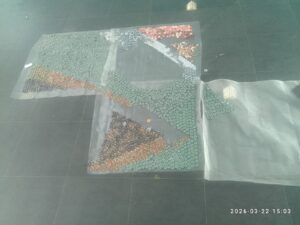
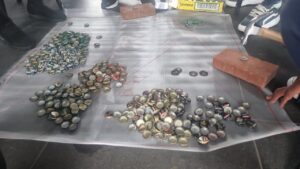
Overview Title: The Broken Fabric of Society: The Story of uMama uYangichaza workshops.
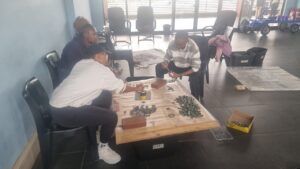
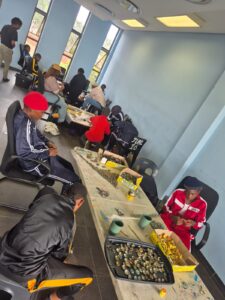
Duration: 07 March 2026 – 09 May 2026 Reporting Period: Week 1 – 7 Venue: June 16 Interpretation Centre (Soweto)
Facilitators: Lead Artist(s) Simangaliso Sibiya, Basetsana Mfolo, with collaborators, Mongezi Twala, Omphemetsi Ramatatse, with assistance from Simon Mokoena, Mzwakhe Mguli, and Ntokozo Nkosi.
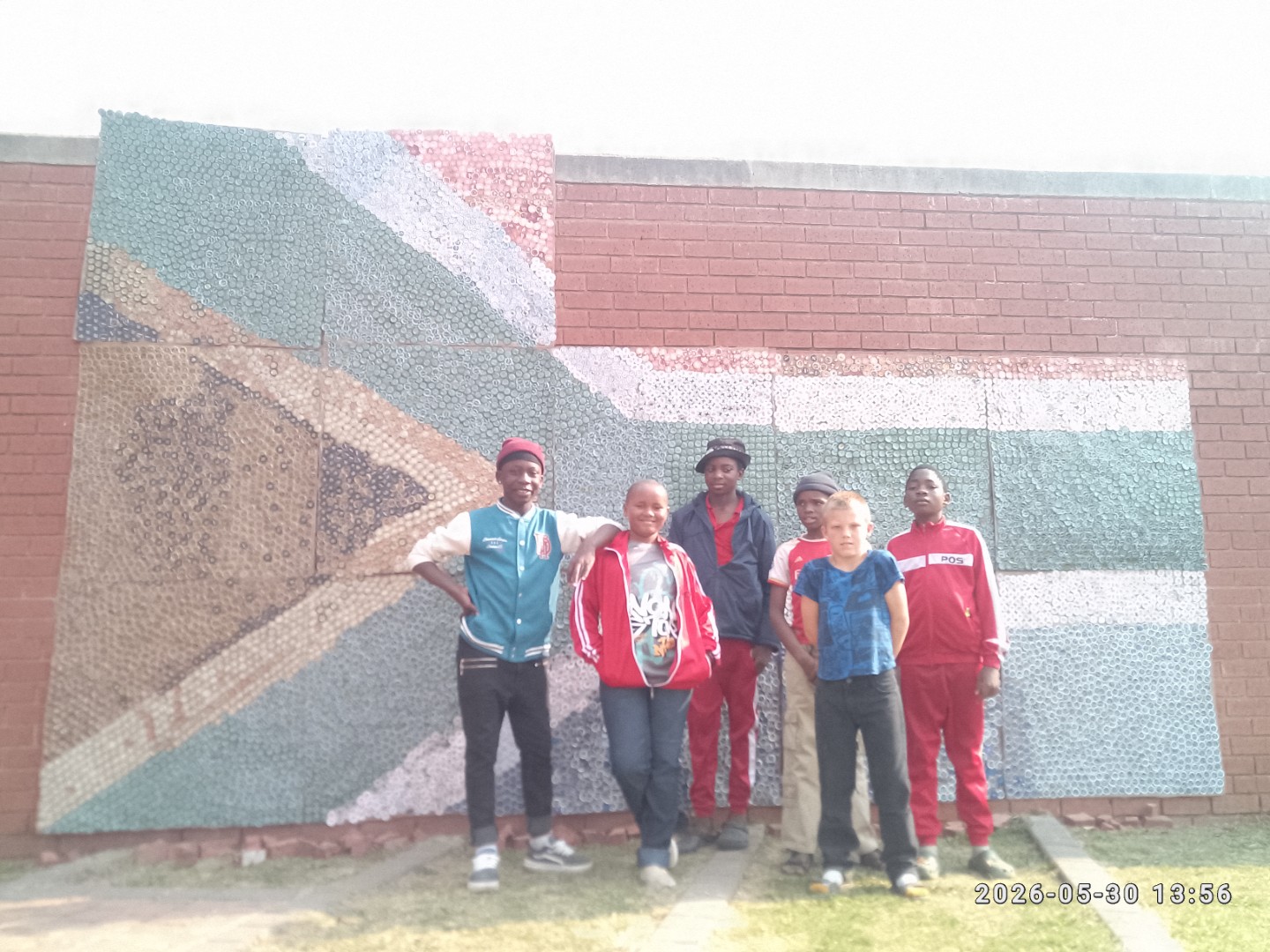
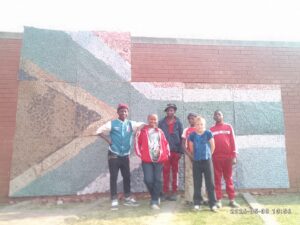
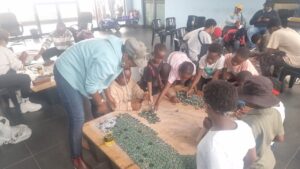
Summary: This programme aspires to reinterpret the South African democratic flag using metallic liquor bottle caps as a commemoration of all the women who were independent bar/pub owners under apartheid South Africa, known contemptuously as “Shebeen Queens” by the oppressive system, and “uMama uyangichaza” by their patrons. With a narrow focus on the woman of 1976, The Broken Fabric of Society: The Story of uMama uyangichaza, is a conversation about the social world that was built by women who ran informal bars/pubs that functioned as a space of survival, politics, and community care. The structural role(s) of uMama uyangichaza are well deposited in oral archives such as Umqombothi – Yvonne Chaka Chaka’s hit classic and more recently Kwesta’s song Aunty however, it is formally under-archived, and sometimes names are inconsistently documented.
Objectives:
- To produce a five square metres of a reinterpretation of the South African flag for the 50th Commemoration of the 1976 Youth Uprising in collaboration with the members of Walter Sisulu Centre, and local participants.
- Contributing to the overall Youth Uprising Archive within the Soweto History and Archives Project (SHAP).
- Basic Arts Education (Skills transfer)
- Documenting and archiving the stories of uMama uyangichaza as it stands in 2026.
- Developing an Educational program on the role of alcohol in South African history with a focus on Shebeens.
- To develop a relationship between the Arts, Culture, and Heritage sectors in Townships with public education for future educational supplements and programmes.
Expected Outcomes: By week 10 participants are expected to contribute towards a mapping exercise of the current layout of shebeens, develop an oral archive through a playlist, a letter writing exercise, basic interview skills, and an artwork that reinterprets the South African democratic flag using metallic liquor bottle caps as a commemoration of all the women who were independent bar/pub owners under apartheid South Africa known contemptuously as “Shebeen Queens” by the oppressive system, and “uMama uyangichaza” by their patrons.
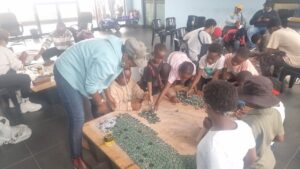
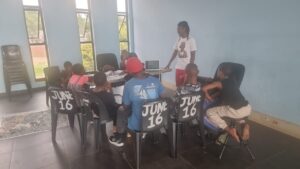
The workshops were done in collaboration with interns at the Hector Pieterson Museum. The museum hosts 15 interns from the Johannesburg Tourism Company and the South West Gauteng TVET College, George Tabor Campus. The Tourism ambassadors are placed to provide much needed support to the Museum. They are integrated into all Museum departments, and they are working under and mentored by the Museum staff.
Core objective: To use visual artmaking workshop methodology with museum interns at Hector Pieterson Museum to explore the proposition that “enlarging the knowledge and understanding of today’s youth about the 1976 student uprising, with a focus on the lesser-known roles of female students in the resistance struggle, can help shape the awareness, concerns, and ideas for resolving problems that confront the youth today”. See the full set of bodymaps and a report on the project below.
These three workshop processes are proposed for use with secondary school, university students or adult workshops within the 1976@50 project. These are based upon principles and practice developed by cultural activists during the period around and following the 1976 uprising in South Africa; and subsequently adapted to arts and culture education and community arts after 1994. (Processes described here focus on the visual/plastic arts; however the basic approach has been and can be used with music, oral performance/ poetry; drama; dance; etc, if time and facilitators experienced in these areas are available).
For use with secondary school students in the 1976@50 project.
1. Basic workshop structure: up to 14 participants plus 2 facilitators; at least 2 full working days (7 or 8 hours per day), ideally consecutive days. For larger projects such as mural-making, extra time may be needed to complete work; this could be done over days or weeks as required. – if several workshops in different locations are run simultaneously, would need facilitation teams for each project.
2. Introduction to workshop (standard for all 3 proposed processes) (time allocation ½ day):
- Introducing participants/facilitators; workshop principles (respect for all participants/ non-discrimination and denegration/ building upon participants’ own experiences and perceptions, etc)
- Intent of workshop: to explore creative cultural processes developed within liberation struggle in South Africa, and relevance to these to circumstrances and issues facing youth today
- Introductory input (1 hour input plus discussion): history of South African culture of liberation tracing impact of oppression/repression of pre-colonial and anti-colonial cultural expression; Black Conciousness (from late 1960s); impact of 76 uprising on cultural structures and mobilization; Medu and Art as a weapon of struggle; emergence of art/culture within mass movement and liberation struggle.
- Visualizing own community/ society perceptions/understanding, needs, issues, way forward: what are problems and possibilities facing workshop participants today? (1 hour process plus discussion)
- Discussion of culture (language, music, movement/dance/performance, visual art) as communication, reflecting both what the artist perceives and believes, how the audience interprets the message, and what the message proposes for a way forward.
3. Various visual art-making processes for different workshops:
- Bodymapping; self and community perception (this is a basic introductory workshop process to introduce art-making/ creative conception, developed in 1990s and 2000s based on liberation art theory and praxis) (see detailed description of bodymapping process in Naledi ya Meso and or Art as Advocacy books) – Time: afternoon and morning of day 2. Process ends day 2 with display of bodymapping artwork and discussion by each participant of what they hoped to portray, and how this relates to experience and perception of other participants. Discussion should also include “what should we do about the problems and possibilities identified in the art-making”? Proposed outcome: artworks made during workshop displayed (in school, community centre, or public space) for discussion with other community members (as groundwork for potential mobilization of community around problems identified).
- Mural making:
- Propose group paints a mural using existing mural design – notably Thami Mnyele graphic from Alexandra struggles in late 1970s and early 1980s. In this case, group should begin by looking at proposed design and ask what they see as key elements of message (in case of Thami’s design, elements include historic cultural expression, links between resistance, protest and cultural creativity; inspiration for struggle; role of liberation movement in taking this forward). Outcome is painting mural in public space, generating discussion on historical roots of cultural activism, and implications for community today.
- Mural making de novo (requires more experienced facilitation): ask group participants to discuss what they see as key issues, how these relate to or differ from those faced in 76 uprising. Group then draws images that they believe identify key problems and concerns (facilitators should as needed talk through how to develop relevant images: refer to photos or iconic pictures where these exist, ask participants to recall own memories involving issues, and to attempt drawing key elements and scenes from these memories, etc). Facilitator and participant then look at how various narratives fit together into visual narrative /mural design (relative positioning of pictures within mural, size, colour, visual links and connections, etc). As group reaches agreement that their ideas are included, the resulting mural is painted in public space. Also plan for public presentation and discussion.
- Poster-making: As in Mural process 2, ask group participants to discuss what they see as key issues, how these relate to or differ from those faced in 76 uprising. Group then draws images that they consider key problems and concerns facing them today (facilitators also should talk through how to develop relevant images: refer to photos or iconic pictures where these exist, ask participants to recall own memories involving issues, and to attempt drawing key elements and scenes from their own memories). Where common themes are identified amongst participants, divide into sub-groups to develop image and poster messaging to address problem and possible solutions. As sub-groups, develop final poster content; depending upon group member skills, these can use photos and computer text, drawing, etc. Also end with public display and discussion of issues raised.
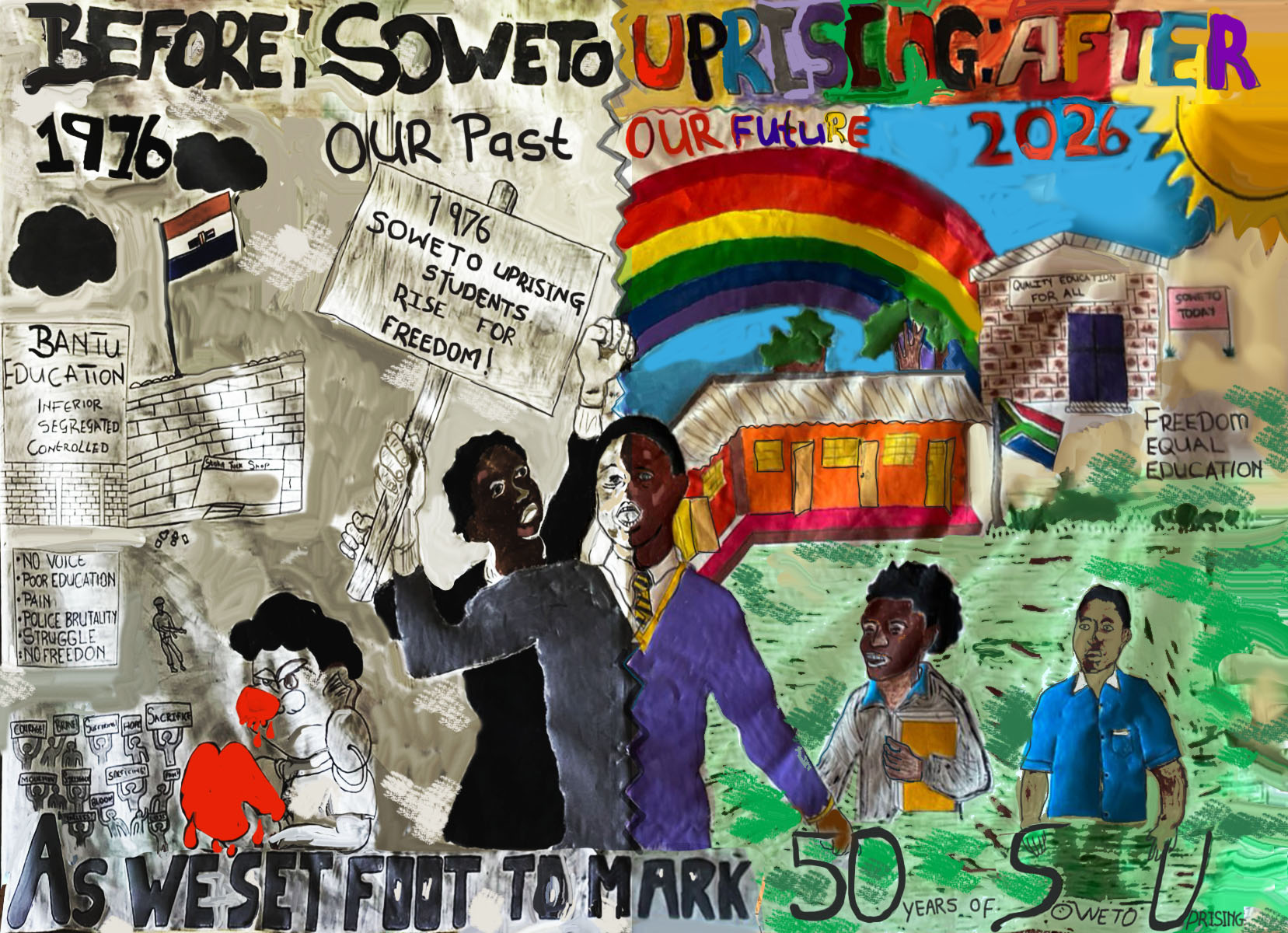
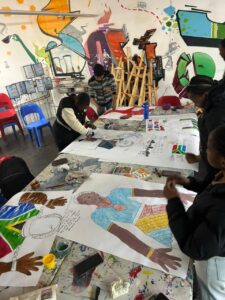
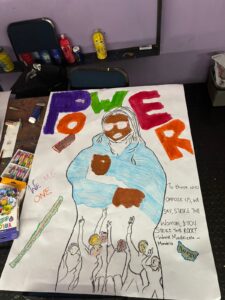
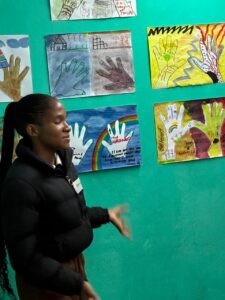
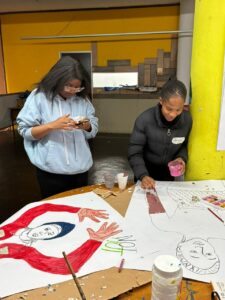
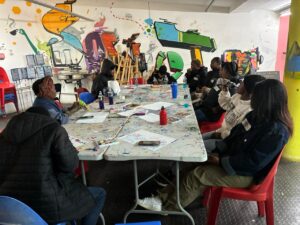


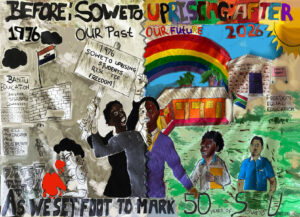
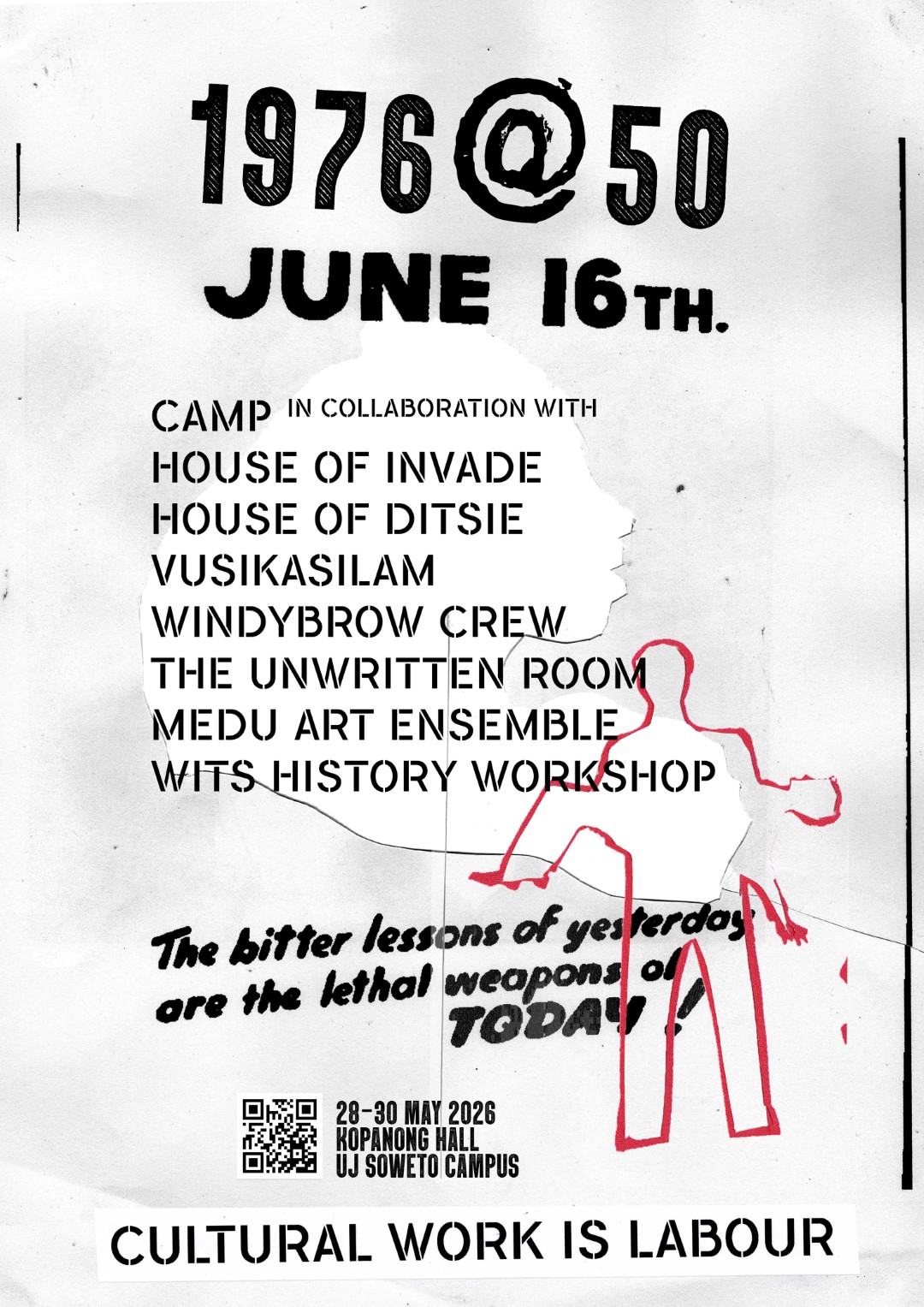
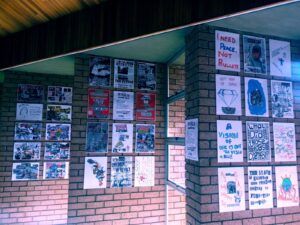
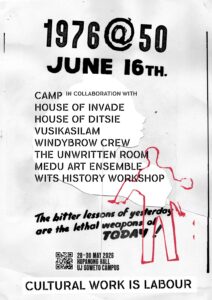
The 50th anniversary of the 1976 Student Uprising is a major national moment. However, many young people today know only the iconic photo of Hector Pieterson, not the daily resistance, the cultural underground, or the role of student organising. For many surviving 1976 veterans, their full stories, beyond June 16, are being forgotten. There is an urgent need for intergenerational, arts-led dialogue that turns history into collective action, not just commemoration.
“From Soweto ’76 to now — art is a weapon of struggle” brings together Cultural Workers and youth in intersectional gatherings to mark the 50th anniversary of the 1976 Student Uprising. Two linked workshops will use collective art making strategies including working with archival material, collage, print, poster and banner making to connect strategies from 1976, from boycotts, alternative classes, clandestine organising to present struggles — including international solidarity from South Africa to Palestine, Congo and Sudan and other global movements contesting imperialism. CAMP will prioritise access for women, girls and non-binary people to challenge male-centric narratives that persist in erasing the histories of the women, like Antoinette Sithole, who often carried the struggle and the brunt of the violences.
CULTURAL WORK AS CARE: CAMP provides pop-up workshop spaces, facilitation training, creative resources, and cross-movement solidarity platforms – CAMP seeks to hold “a soft space for hard questions” at 1976@50 to facilitate creative ways for people to participate in the conference space, and metabolise what they are experiencing while making cultural artifacts.
ABOUT CAMP
The Community Arts Mobilisation Project (CAMP) is a collective of cultural workers committed to the practice of Narrative Repair. Operating at the intersection of art, memory, and social justice, CAMP makes “soft spaces for hard questions”— inviting communities to encounter the polycrisis through collaboration, metabolise lived experiences of sacrifice zones, and imagine alternative futures. Through its Cultural Worker Laboratories, CAMP bridges grassroots social movements with artistic practice, supplying the materials, spaces, and strategies to create low-cost, high-impact creative interventions. CAMP transforms dialogue into action through acts of care and collective making, ensuring that art serves as both a weapon of struggle and a tool for healing. The storytellers our movements need already exist within communities. The CW Labs create spaces to strengthen artistic practice, unpack social injustices, and develop shared visual language in collaboration with frontline communities. Through narrative repair, these labs build cohesive messaging for direct action and generate materials for education, memory-building, and protest.
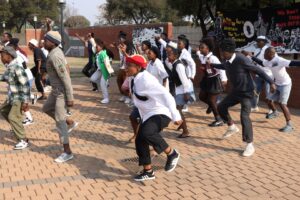
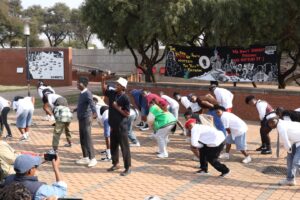


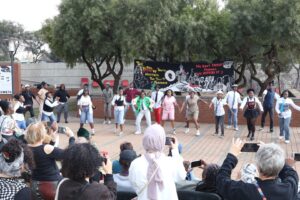
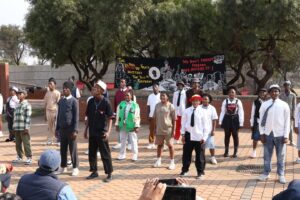
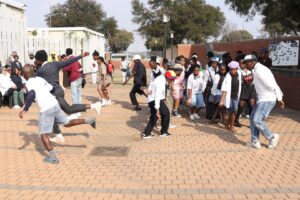

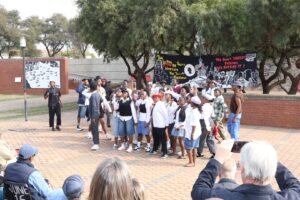

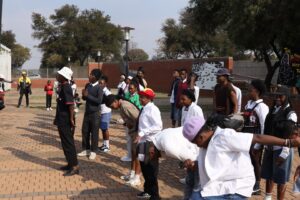
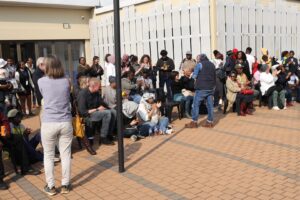
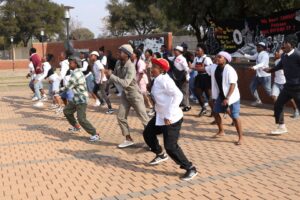


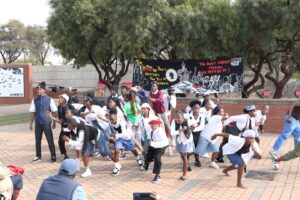
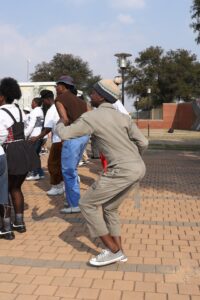
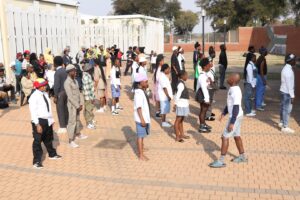
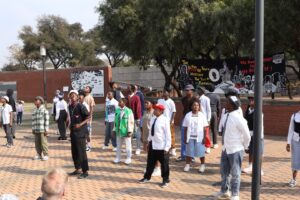
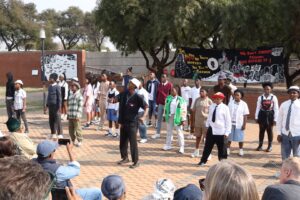
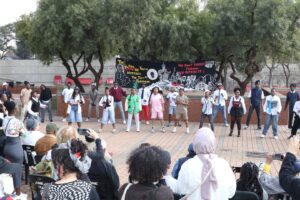
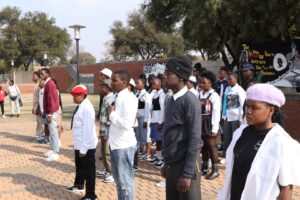

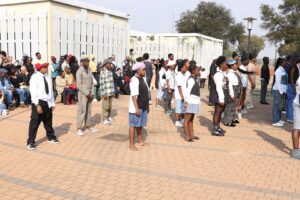
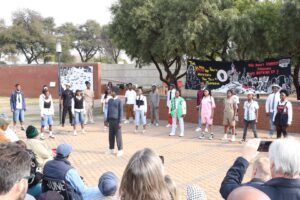
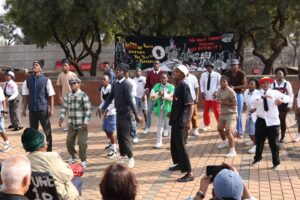
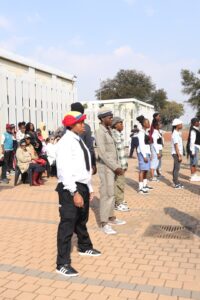


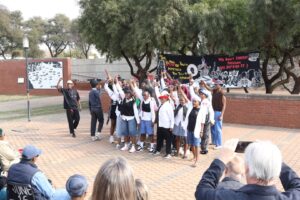
Performed: Césaire Youth’s Notebook of a Long Day’s Journey into a Hillbrow Night.
What does the Soweto Uprising ask of us now, fifty years later, from the streets and high-rises of Hillbrow? In this new iteration of Notebook of a Long Day’s Journey into a Hillbrow Night, the Césaire Youth return to Aimé Césaire’s great anticolonial long poem through the charged memory of 1976. Their ensemble performance rethinks the Soweto Uprising not as a sealed historical event, but as part of a longer, unfinished history of colonial violence, Black resistance, youth insurgency, and broken promises. Set in Hillbrow today, the work asks how that history lives on in young people’s bodies, languages, fears, friendships, and futures. The poem becomes both tribute and provocation: an act of remembrance that carries Soweto into the present, confronting unemployment, migration precarity, xenophobia, gendered violence, environmental crisis, and survival.
This iteration is directed by Sibagle Mangena with musical direction by Sibahla Mangena and assisted by Sbusiso Shozi.